Buying a Vacation Home with 15-Year Fixed Rates
Comparing 15 Year Second Home Mortgage Rates to Primary and Investment Loans
When you shop for financing on a Florida second home, lenders look closely at occupancy, property type, credit profile, equity, reserves, and the full monthly cost of ownership. A primary residence is generally viewed differently than a vacation property because it is where you live full-time. A second home in Tampa Bay—whether it is near Clearwater Beach, St. Petersburg, Dunedin, Safety Harbor, or another surrounding community—may be priced differently because it is not your main residence.
Rate Differences Across Property Types
In many cases, 15 year second home mortgage rates may be higher than rates for a primary residence and may be priced differently than investment property loans. The exact difference depends on your full file, the lender, the property, and market conditions at the time you apply.
Investment properties are usually evaluated under a different risk and occupancy profile because the property is being financed for income-producing use. A Conventional Home Loan may be worth exploring for a second home if the property is primarily for your personal use and the loan fits your situation.
Compliance review note: This section mentions Conventional loan options and should be reviewed for current eligibility language before publication.
Fannie Mae Pricing and LLPAs
Why can second homes cost more to finance? Fannie Mae and Freddie Mac use Loan-Level Price Adjustments, often called LLPAs, as part of their pricing frameworks. These adjustments can be affected by factors like credit, equity, occupancy, and loan purpose. This is not a government endorsement or agency approval; it is simply part of how many conventional loans are priced in the secondary mortgage market.
For Tampa Bay buyers, the takeaway is simple: a quote on a second home in Florida may look different from the mortgage on your main home. Understanding Second Home Rate Trends can help you ask better questions before you choose a loan structure.
15-Year vs. 30-Year Second Home Mortgages: Payment & Interest Breakdown
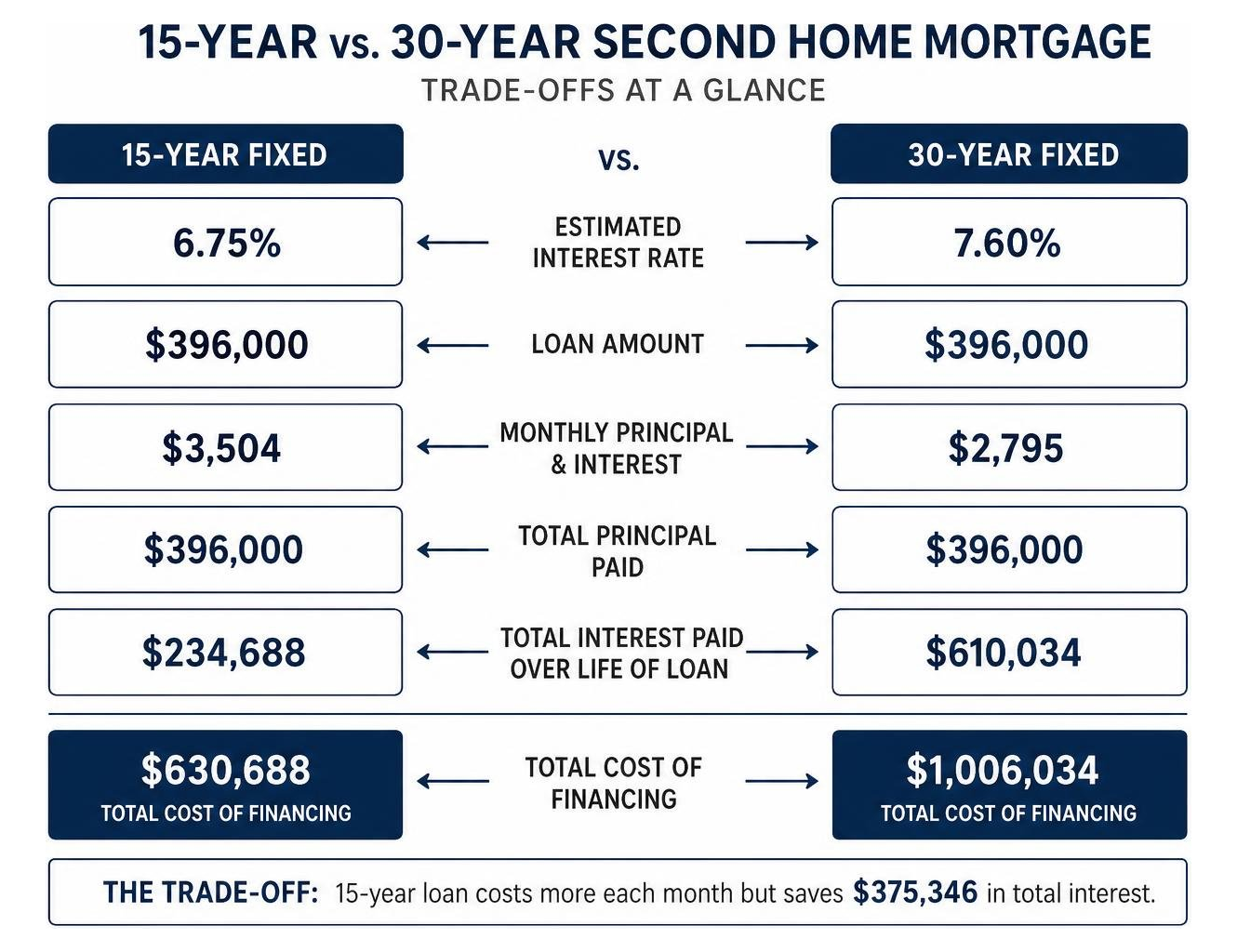
Choosing between a 15-year fixed loan and a 30-year fixed loan comes down to cash flow, long-term interest cost, and how the Florida property fits into your life. A 15 Year Fixed Mortgage may help you pay the loan down faster, but the required monthly payment is usually higher than a longer-term option.
Monthly Payment vs. Total Interest Trade-Offs
Here is a simple way to think about the trade-off for a Tampa Bay second home purchase:
| Factor | 15-Year Fixed Second Home | 30-Year Fixed Second Home |
|---|---|---|
| Monthly principal and interest | Usually higher | Usually lower |
| Total interest over the loan term | Usually lower | Usually higher |
| Equity buildup | Often faster | Often slower |
| Budget flexibility | Can be tighter | Can be easier month to month |
| Best fit may depend on | Strong cash flow and shorter payoff goals | More monthly flexibility and long-term planning needs |
The right answer depends on your income, current debts, reserves, insurance costs, taxes, HOA dues, and how often you plan to use the property. A waterfront condo in Clearwater, a townhome in St. Petersburg, and a single-family home north of Tampa can each carry very different costs beyond the mortgage.
Pros and Cons of Choosing a 15-Year Term
Pros:
- Lower long-term interest cost: A shorter term may reduce total interest compared with a longer repayment period.
- Faster equity buildup: More of each payment may go toward principal earlier in the loan.
- Earlier payoff potential: This may help if your goal is to reduce housing debt before retirement.
Cons:
- Higher monthly commitment: The payment can reduce flexibility in your monthly budget.
- Tighter income review: Lenders will look at whether the full payment fits your broader debt picture.
- Less room for Florida carrying costs: Insurance, flood coverage, HOA dues, and repairs can be meaningful on second homes, especially near the coast.
Qualification Guidelines: Credit, Down Payment, and Debt Review
Qualifying for a second home mortgage in Florida usually involves a closer review than financing a primary residence. Lenders want to understand your primary housing expense, proposed second home expense, other debts, reserves, and the property’s intended use.
How Down Payments Impact 15 Year Second Home Mortgage Rates
Down payment requirements and pricing tiers depend on the loan program, lender, occupancy, credit profile, property type, and market conditions. In general, a larger borrower contribution may help reduce lender risk and may improve pricing, but the exact impact depends on the full file.
For a Tampa Bay second home, the property itself can matter too. A condominium near St. Petersburg, a home in a coastal flood zone, or a property with higher insurance costs may require extra review.
Income, Debt, and Cash Reserves
Because you may be carrying two housing payments, lenders typically review:
- Credit profile: Stronger credit may help with pricing and available options, but results depend on the overall application.
- Debt-to-income picture: Lenders compare your monthly debt obligations with your gross income to see whether the proposed payment fits program guidelines.
- Cash reserves: Some second home scenarios may require liquid reserves after closing. Florida insurance premiums, HOA dues, and property taxes should be part of that discussion.
- Occupancy and property use: To be treated as a second home, the property generally needs to be for personal use and suitable for occupancy. If the property is primarily rented or operated as an income property, it may be reviewed differently.
To review where your financial profile stands before shopping in Tampa, St. Petersburg, Clearwater, or the surrounding communities, you can start a conversation through Pre Approval. Pre-approval is not final loan approval, and final terms depend on underwriting, documentation, property review, and program requirements.
Monthly Payment Scenarios and Florida Carrying Costs
When purchasing a second home in Tampa Bay, your monthly cost includes more than principal and interest.
Payment Examples by Down Payment Strategy
Instead of relying on a one-size-fits-all example, look at the moving parts that shape your payment:
- Purchase price: A property near the water may carry a different cost profile than an inland property.
- Loan amount: The amount financed affects principal and interest.
- Term: A 15-year term usually has a higher payment than a longer term, but may reduce total interest over time.
- Taxes and insurance: Florida property taxes, homeowners insurance, wind coverage, and flood insurance can materially affect affordability.
- HOA or condo dues: Many Tampa Bay condos and planned communities include association fees that should be reviewed early.
To test custom loan amounts, down payments, and term lengths for your own target properties, try our online Mortgage Calculator. Calculator results are estimates and do not replace a full loan review.
Carrying Costs That Impact Affordability
Beyond your core mortgage loan balance, ownership costs can impact your overall budget. For a detailed breakdown on long-term homeownership costs, refer to this comprehensive Guide to Second Home Financing. Pay close attention to these items:
- Hazard, wind, and flood insurance: Florida coastal and near-coastal properties can have higher insurance costs. If the home is in a flood zone, flood coverage may be required by the lender.
- Property tax reassessment: A seller’s current tax bill may not reflect what you pay after purchase. Florida tax treatment can differ for second homes, so review this with a tax professional.
- HOA, condo, and association fees: Condominiums and resort-style communities may charge monthly or quarterly assessments for amenities, reserves, maintenance, or insurance.
- Maintenance and property management: A second home that sits vacant part of the year may need lawn care, pool care, storm preparation, cleaning, or local check-ins while you are away.
Tax Implications and Rental Income Rules
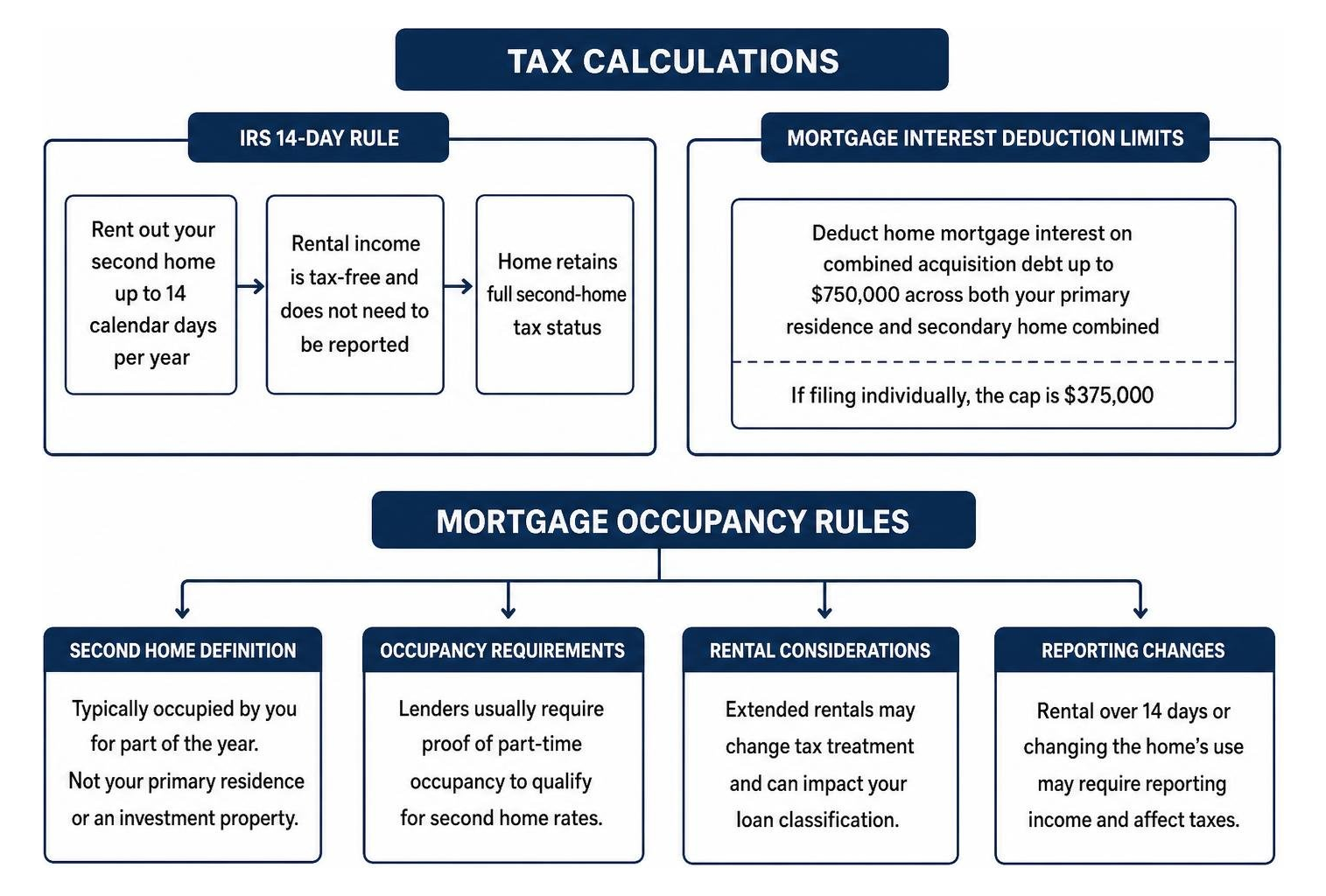
Managing tax rules, occupancy guidelines, and local rental restrictions matters when financing a Florida second home.
Rental Use and Tax Deductions
Tax treatment can change based on how often you use the property personally, whether you rent it, and how it is reported. Before buying a second home in Tampa Bay, talk with a qualified tax professional about:
- Short-term rental rules: Cities and counties may have their own rules for vacation rentals. St. Petersburg, Clearwater, Tampa, and beach communities can treat rental activity differently.
- Mortgage interest deductions: Deductibility depends on current tax law, loan purpose, total mortgage debt, and how the property is used.
- Property tax deductions: State and local tax rules can affect how much of your property tax expense is deductible.
- Occupancy classification: If the home is used primarily as a rental, the mortgage may need to be reviewed as an investment property rather than a second home.
Strategies to Seek Better 15 Year Second Home Mortgage Rates
To put yourself in a stronger position for a 15-year second home loan, focus on the parts of the file you can control:
- Review credit before applying: Check for errors and reduce revolving balances if that fits your broader financial plan.
- Compare down payment options: A larger down payment may improve pricing or reduce mortgage insurance needs, but the right amount depends on liquidity and reserves.
- Consider how to structure funds: If you have equity in your primary home, a Refinance may be worth discussing as one possible planning tool.
- Talk through the numbers before making an offer: Rates and terms vary by file. You can Get a Quote to discuss what may make sense for your Florida second home plans.
Frequently Asked Questions About Second Home Mortgages
Can I use rental income to qualify for a 15-year second home mortgage?
For many second home loan scenarios, projected rental income may not be usable for qualifying because the property is being reviewed for personal use. If the plan depends on rental income, the loan may need to be evaluated as an investment property instead, which can affect pricing, reserves, and documentation.
What is the minimum down payment required for a second home?
Minimum down payment requirements depend on the loan program, lender, property type, occupancy, and the rest of your application. A larger down payment may improve pricing or reduce mortgage insurance, but keeping enough reserves for Florida insurance, taxes, maintenance, and storm-related expenses matters too.
How far does a second home need to be from my primary residence?
Lenders generally want the property to make sense as a true second home. Distance can be part of that review, but so can the property’s location, use, and whether it is in a recognized vacation or seasonal market. A second home in Clearwater Beach, St. Pete Beach, Anna Maria, or another Florida destination may be reviewed based on the full occupancy story.
Compliance review note: This FAQ discusses second home and investment property classification and should be reviewed for current Conventional eligibility language before publication.
Final Thoughts for Tampa Bay Second Home Buyers
Securing a vacation property or future retreat in Florida is a big decision. Financing it with a 15 year second home mortgage rate may help you build equity faster and reduce long-term interest, but the higher payment needs to fit comfortably with your full financial picture.

At Home Loan Advisors LLC, Josh Jampedro is a Tampa, Florida mortgage broker and vice president with more than 1,000 closed transactions and more than 10 years of experience. If you are comparing properties in Tampa, St. Petersburg, Clearwater, or the surrounding communities, the goal is to understand the numbers before you commit.
If you want to talk through your options, learn more about our 15 Year Fixed Mortgage solutions or contact Josh to discuss what may make sense for your situation.
Official platforms: Instagram @joshjampedro, YouTube @BetterRate, LinkedIn linkedin.com/in/josh-jampedro, Facebook FLHomeLoanAdvisors, and website joshjampedro.com.
Mortgages are complex so let me give you the tools you need to make the right decisions.