Is a 15-Year Home Mortgage Worth the Higher Monthly Payment?
Important note: Interest rate discussions in this article are general market education, not a personalized quote, commitment to lend, or financial advice. Your actual options depend on your credit profile, income, debts, property details, loan structure, timing, and goals. If you are comparing mortgage options, contact Home Loan Advisors for a personalized conversation about your financial situation and what may make sense for you.
Navigating the mortgage market in Tampa Bay means watching the benchmark numbers, but not treating them like a quote. Published 15 year home interest rates can help you understand the direction of the market, but your actual rate depends on the loan structure, property details, credit profile, and the lender’s pricing at the time you apply.
For borrowers looking in Tampa, St. Petersburg, Clearwater, Brandon, Wesley Chapel, Riverview, Palm Harbor, or surrounding Florida communities, local costs also matter. Property taxes, homeowners insurance, flood zone determinations, condo association details, and homeowners association dues can all affect the total housing payment, even when the interest rate looks attractive.
A useful benchmark source is the 15-Year Fixed Rate Mortgage Average in the United States, which tracks Freddie Mac’s national survey data. Use it as a reference point, not as a promise of pricing or approval.
How Data Sources Report 15 Year Home Interest Rates Differently
When you browse financial news, you may notice that different outlets report different mortgage rates on the same day. That usually comes down to methodology and timing.
- Freddie Mac (Primary Mortgage Market Survey®): Freddie Mac publishes weekly survey results. Since November 2022, Freddie Mac has gathered data directly from automated underwriting submissions through its Loan Product Advisor® (LPA®). It reflects application data for prime conforming loans across a broad group of lenders.
- Optimal Blue: The 15-Year Fixed Rate Conforming Mortgage Index tracks daily rate lock data. Because it measures rate locks processed through its pricing engine, it can reflect market movement faster than weekly surveys.
- Bankrate Monitor: The Bankrate Monitor: Fixed Mortgage Rate - 15 Year Fixed relies on a standardized national survey model using defined borrower and loan assumptions. That makes it useful for comparison, but it may not match your personal scenario.
Because each index measures a different dataset—from daily rate locks to weekly standardized borrower quotes—comparing mortgage rates requires an apples-to-apples understanding of the source.
Historical Averages and Trends for 15 Year Home Interest Rates
To put current rate movement into context, it helps to look at longer historical cycles instead of reacting to a single headline. Freddie Mac began tracking the 15-year fixed mortgage product in its survey in the early 1990s, and rates have moved through periods of expansion, recession, inflation pressure, and Federal Reserve policy shifts.
Tracking 15 Year Mortgage Rate Historical Data can help Tampa Bay buyers and homeowners see whether current pricing is moving up, down, or holding steady relative to prior periods.
Short-term volatility can move mortgage pricing quickly. But the more practical question is usually this: does the payment, cash reserve requirement, and long-term plan make sense for your Florida home purchase or refinance?
Comparing 15-Year vs. 30-Year Mortgages: Rates and Trade-Offs
The decision between a 15-year and a 30-year term usually comes down to the trade-off between lower total interest cost and monthly cash flow flexibility.
| Loan Feature | 15-Year Fixed Mortgage | 30-Year Fixed Mortgage |
|---|---|---|
| Interest Rate Pattern | Often priced lower than a comparable 30-year fixed loan | Often priced higher than a comparable 15-year fixed loan |
| Monthly Payment Amount | Higher principal and interest payment | Lower principal and interest payment |
| Principal Paydown Speed | Faster equity build | Slower equity build early in the term |
| Total Lifetime Interest | Usually lower if the loan is held to term | Usually higher if the loan is held to term |
| Budget Flexibility | Less monthly flexibility | More monthly flexibility |
Because lenders take on less duration risk with a shorter repayment schedule, a 15-year fixed mortgage may come with a lower rate than a comparable 30-year loan. Choosing a 15-Year Fixed Mortgage may help reduce total interest over time, while a 30-Year Fixed Mortgage may offer more room in the monthly budget.
Calculating Lifetime Interest Savings vs. Monthly Affordability
The main appeal of a 15-year mortgage is that the loan amortizes faster. More of each payment goes toward principal earlier in the loan, and the shorter term may reduce total interest if you keep the loan long enough.
But the required payment is higher. For many Tampa Bay households, that matters because the mortgage payment is only one piece of the housing budget. Florida homeowners insurance, flood insurance where applicable, property taxes, condo fees, HOA dues, maintenance, and reserves should be reviewed together before choosing a term.
You can test different scenarios using our interactive Mortgage Calculator. The goal is not to force the shortest term possible. The goal is to understand the trade-off clearly.
Evaluating Alternative Loan Products and Refinancing
If a 15-year payment structure feels too tight, one option may be securing a longer-term loan and making additional principal payments when cash flow allows. That approach can help accelerate payoff while keeping more flexibility month to month.
Borrowers may also want to explore other structures:
- Adjustable Rate Mortgages (ARMs): For buyers who may move or refinance within a shorter planning window, an Adjustable Rate Mortgage may be worth discussing.
- Refinancing into a 15-Year Term: Existing homeowners who have built equity or want a shorter payoff path may choose to Refinance from a longer term into a 15-year fixed loan, depending on the numbers and the full cost of the refinance.
Key Factors That Influence 15-Year Home Rates and Future Outlook

Mortgage interest rates do not move in a vacuum. They are shaped by broader market forces that influence borrowing costs across the economy.
Macroeconomic Drivers Behind Rate Movement
Several core economic factors can affect day-to-day rate changes:
- 10-Year Treasury Yields: Mortgage rates often move in the same direction as the yield on 10-year U.S. Treasury bonds.
- Federal Reserve Monetary Policy: The Fed does not set mortgage rates directly, but its policy decisions can influence market liquidity and investor demand.
- Inflation Trends: When inflation pressure rises, mortgage investors may demand higher returns, which can push rates up.
- Secondary Market Appetite: Investors that buy mortgage loans can adjust pricing based on risk expectations, loan type, and market conditions.
For Tampa Bay borrowers, the rate is only part of the decision. Insurance availability, flood zone status, condo review requirements, and Florida property tax treatment may affect the overall mortgage picture.
Individual Qualification Criteria for Sub-Average Rates
National averages provide a benchmark. Your actual interest rate depends on your personal financial profile and the property being financed. Lenders may evaluate several criteria:
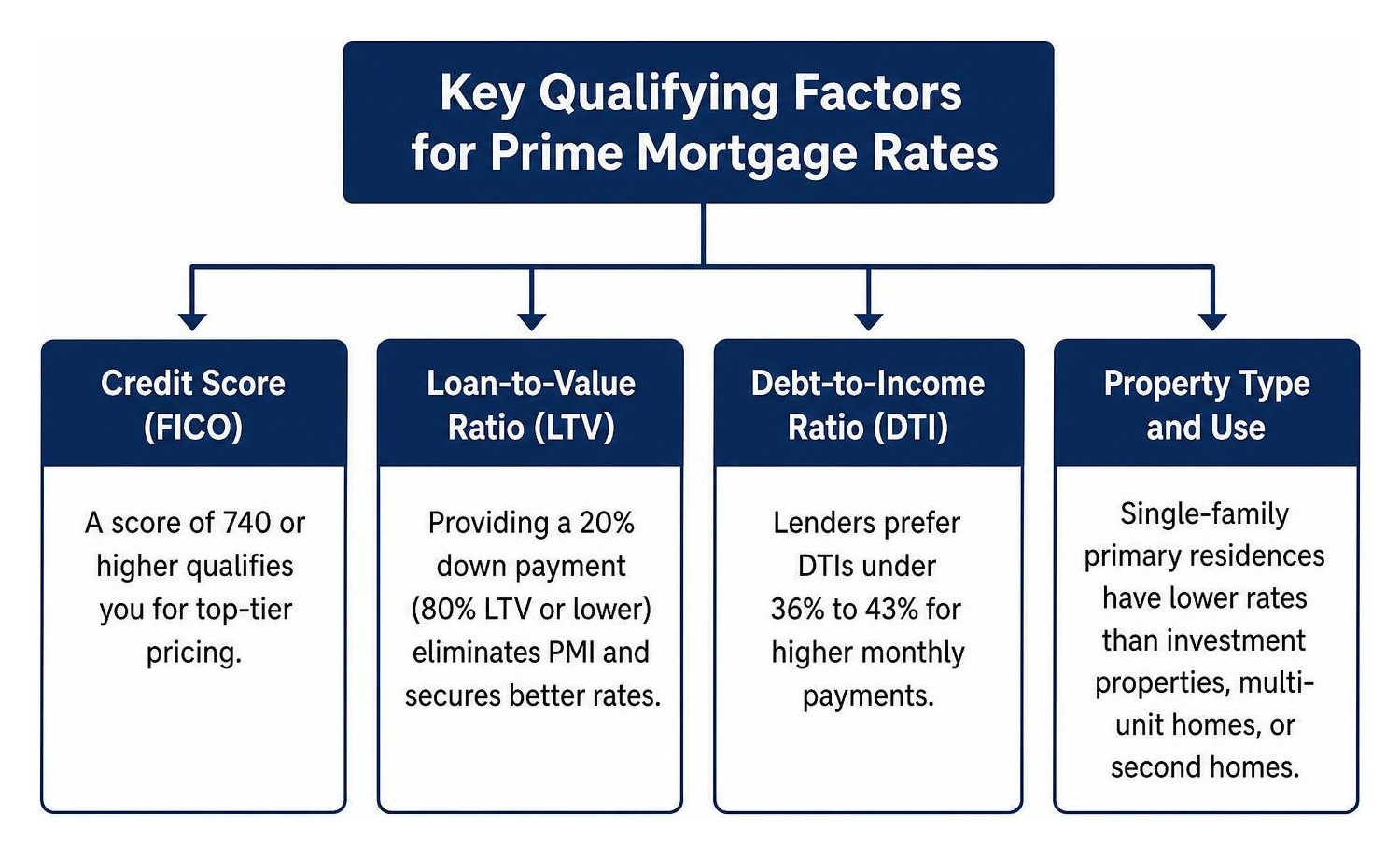
- Credit Profile: Stronger credit may help with pricing, but the exact impact depends on the loan program and lender guidelines.
- Loan-to-Value Ratio (LTV): A lower LTV may improve pricing and may reduce or remove certain insurance costs, depending on the loan type.
- Debt-to-Income Ratio (DTI): Because a 15-year loan has a higher payment than a longer term, lenders review income, debts, and reserves carefully.
- Property Type and Use: Pricing can vary for primary residences, second homes, investment properties, condos, multi-unit properties, and other property types.
Strategies to Compare 15-Year Home Loan Rates

Getting a competitive 15-year mortgage rate starts before the loan application. A few practical steps can make the conversation clearer:
- Review Your Credit Early: Check your credit reports for errors, pay attention to revolving balances, and avoid taking on new debt before applying when possible.
- Understand Your Cash Position: A larger down payment or stronger reserves may improve the file, but the right amount depends on your full budget and your Florida housing costs.
- Compare Loan Estimates: Ask for customized loan estimates from more than one lender so you can compare rate, fees, points, and total cost—not just the headline rate.
- Ask About Discount Points: Paying points may make sense if you plan to keep the loan long enough, but it should be tested against your break-even point.
- Talk Through the Rate Lock: Rate locks involve timing, market movement, and your expected closing date. Learn more in our guide on When to Lock Your Mortgage Interest Rate.
For Tampa Bay properties, also bring up insurance, flood zone status, condo association details, and HOA dues early. Those items can change the total payment picture even when the interest rate looks good.
Frequently Asked Questions
What is the current average 15-year fixed mortgage rate?
The current average changes frequently and varies by source. Freddie Mac, Optimal Blue, and Bankrate may report different numbers because they use different data and timing. Treat any published average as a market benchmark, not as a quote or commitment to lend.
How does a 15-year mortgage compare to a 30-year mortgage?
A 15-year mortgage often has a lower rate than a comparable 30-year mortgage, but the required monthly payment is higher because the loan is repaid over a shorter period. In exchange, borrowers may pay less total interest and build equity faster if the loan is held long enough.
Why do different sources report different 15-year interest rates?
Different financial trackers use different methodologies. Freddie Mac uses application data from its underwriting system, Optimal Blue tracks daily rate locks, and Bankrate surveys institutional quotes based on standardized assumptions. That is why reported rates can vary slightly depending on the source.
What Florida-specific factors should Tampa Bay borrowers consider?
In Tampa, St. Petersburg, Clearwater, and nearby communities, the interest rate is only one part of the mortgage decision. Homeowners insurance, flood insurance where applicable, property taxes, condo or HOA dues, and reserve requirements can affect affordability and loan structure.
Final Thoughts for Tampa Bay Borrowers
A 15-year home loan can be a smart fit when the higher payment works with your full budget and your long-term plan. But it is not one-size-fits-all. The better question is whether the shorter term, total interest savings, cash reserves, and Florida homeownership costs make sense together.
Josh Jampedro is a Tampa, Florida mortgage broker and vice president with more than 1,000 closed transactions and more than 10 years of experience. If you are comparing options in Tampa Bay, you can review 15-Year Fixed Mortgage Solutions or start a conversation about what may fit your situation.
Official platforms: Instagram @joshjampedro, YouTube @BetterRate, LinkedIn linkedin.com/in/josh-jampedro, Facebook FLHomeLoanAdvisors, and website joshjampedro.com.
Equal Housing Lender. NMLS number placement should be confirmed by Josh before publication. Human compliance review recommended for eligibility language related to specific loan products, including fixed-rate mortgages, adjustable-rate mortgages, conforming loans, and refinance options.
Mortgages are complex so let me give you the tools you need to make the right decisions.