When to Lock Your Mortgage Rate | Home Loan Advisors
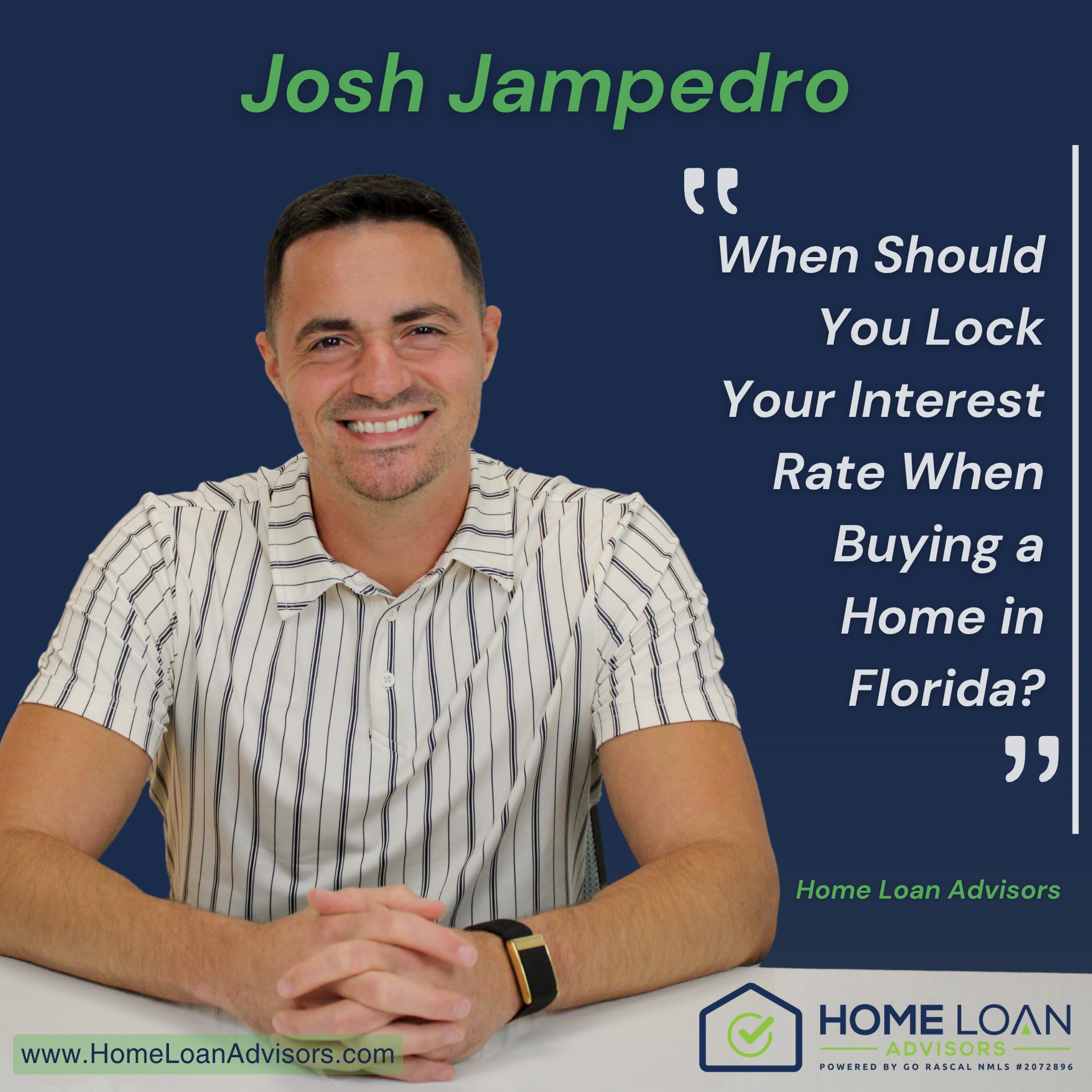
When Should You Lock Your Interest Rate When Buying a Home in Florida?
By: Josh Jampedro, Home Loan Advisors
Video Transcript: When to Lock Your Interest Rate
[00:00 - 00:05]
On-screen Text: When should you lock your interest rate when buying a home in Florida?
Josh: So, first, you need to understand what that means.
[00:06 - 00:27]
When you go to a lender, you're going to get an initial interest rate on a house. That interest rate can change based on supply and demand, and most mortgages are transferred in the secondary market. So, that lender has to give you two options: you can lock it in up front, or you can float it.
[00:27 - 00:48]
What ends up happening if you float is you're sort of gambling with the market. As you're under contract and you inch closer to closing, if rates go up, your interest rate is going up on the loan disclosures that you've signed. So your rate is changing and fluctuating with the market; you could end up with a higher payment, or you could also end up with a lower payment if rates drop.
[00:48 - 01:09]
So that takes a little bit more, you know, risk. That's kind of gambling in that sense in a lot of ways. Alternatively, you can lock your rate up front for a set period of time. That fixes the rate. If rates go up, yours stays the same. If rates go down, yours doesn't go down.
[01:09 - 01:26]
The reason why yours doesn't go down when rates go down after you've locked is because the lender is guaranteeing an interest rate to you that might not be available to them at the time you buy the house.
[01:26 - 01:45]
So keep in mind, if you're set to close in 30 days, they're guaranteeing a rate to you, and then when they go to transfer that loan in the secondary market, if rates have skyrocketed, they will lose a ton of money on that. That's called their hedge—basically an insurance policy that protects them against market movements.
[01:45 - 02:03]
What that means for you is, once you lock your interest rate, you can't unlock it and relock it. With most lenders, there are certain nuances to that, but that's because the lender can't give you lower rates when they drop, but not give higher rates to other people when they go up. Their rate is fixed because it costs them money for their hedge on the secondary market.
[02:03 - 02:24]
So, the best thing to do for most people is lock your interest rate up front when you go under contract. Because having the peace of mind of knowing that what you talked about is set in stone beats maybe getting a little lower rate with the risk of it going up an eighth or a quarter, especially in this market.
[02:24 - 02:30]
Over the course of 30 days, rates may go up a half a point and back down. For most people, it's just not worth the stress of seeing your rate change every day and your loan costs change. So I suggest locking everybody up front for the most part because it just makes the most sense. Guaranteeing something now is always going to be better than guessing.
Executive Summary
Direct answer: For most homebuyers, the best move is to lock your interest rate up front as soon as you go under contract. Locking fixes your rate for a set period so it can't move against you before closing — floating leaves your rate exposed to daily market swings, which means you could end up with a lower payment, but you could just as easily end up with a higher one.
Before you can decide whether to lock or float, you need to understand what those two words actually mean — because most people don't.
What Does It Mean to "Lock" or "Float" a Mortgage Rate in Florida?
Every mortgage lender gives you two options once you have an initial interest rate: lock it in, or let it float. That's because most mortgages get sold on the secondary market, and rates move with supply and demand between the day you apply and the day you close.
| Option | What Happens | Risk Level |
|---|---|---|
| Lock | Your rate is fixed for a set period of time. If rates rise, yours stays the same. If rates drop, yours doesn't drop either. | Low — no surprises at closing |
| Float | Your rate moves with the market while you're under contract. If rates go up before closing, your rate goes up with it. If rates go down, yours goes down too. | Higher — you're gambling on where rates go |
Frequently Asked Questions
Why Doesn't Your Rate Drop If You've Already Locked It?
Once you lock, the lender is guaranteeing you a rate that might not even be available to them by the time your loan actually closes. If you're set to close in 30 days, the lender is promising you today's rate for a transaction that won't fund for a month. When they go to sell that loan on the secondary market, if rates have jumped in the meantime, they absorb that cost — not you.
This protection is called a hedge — essentially an insurance policy the lender buys to protect themselves against market movement between your lock date and your closing date.
Can You Unlock and Relock Your Rate Later?
No — once you lock, most lenders won't let you unlock and relock, with some minor nuances depending on the lender. The math only works one way: a lender can't give every borrower the lower rate whenever rates drop but stick everyone else with the higher rate whenever rates rise. Their hedge is fixed because it costs them real money on the secondary market, so your locked rate has to be fixed too.
So Should You Lock or Float?
Lock it. For the vast majority of buyers, locking up front the moment you go under contract is the right call. Here's the actual trade-off: over a 30-day window, rates might move up half a point and come back down — or they might not. Floating means living with that uncertainty every single day between contract and closing, watching your projected payment shift.
"Guaranteeing something now is always going to be better than guessing." — Josh Jampedro
The peace of mind of knowing your rate — and your loan costs — are set in stone almost always beats the small chance of shaving an eighth or a quarter off your rate by floating. That's especially true in a market where rates can swing meaningfully in either direction over the course of a month.
Bottom line: lock your rate when you go under contract. It's not about predicting where rates go — it's about not having to.
Mortgages are complex, so let me give you the tools you need to make the right decisions.