Latest Florida Housing Market Updates for Today's Buyers
Florida Housing Market Updates: What Buyers Need to Know Now
Florida housing market updates show a market that is active, but far from the rush seen a few years ago. Statewide prices and sales rose in June 2026, while the number of homes for sale fell. Yet conditions vary sharply by home type and metro area - an important point for buyers in Tampa Bay, including Tampa, St. Petersburg, Clearwater, and surrounding communities.
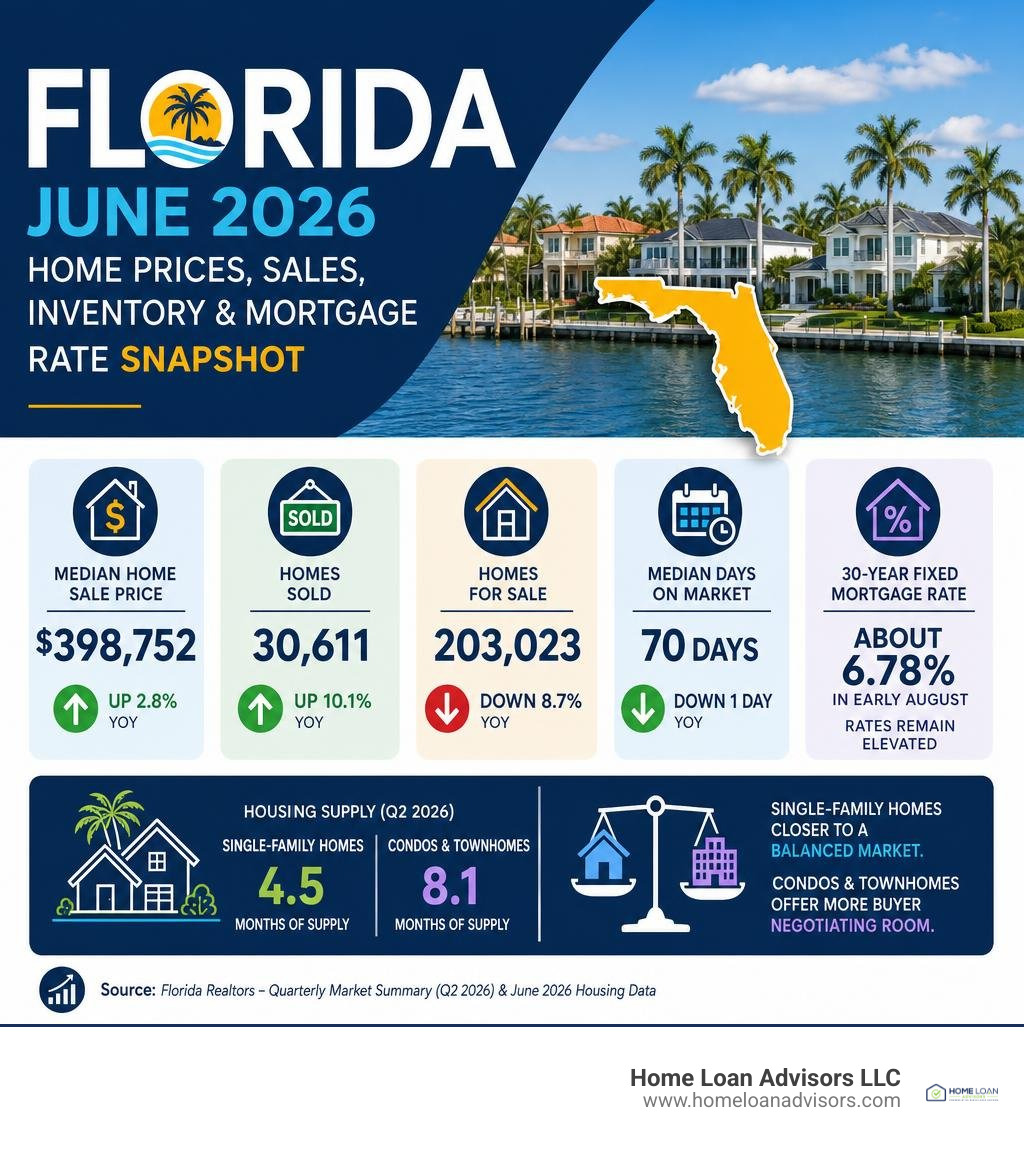
| June 2026 Florida snapshot | Latest reading | Year-over-year change |
|---|---|---|
| Median home sale price | $398,752 | Up 2.8% |
| Homes sold | 30,611 | Up 10.1% |
| Homes for sale | 203,023 | Down 8.7% |
| Median days on market | 70 days | Down 1 day |
| Mortgage rate environment | Elevated compared with pandemic-era lows | Buyer purchasing power remains rate-sensitive |
Single-family homes are closer to a balanced market, with 4.5 months of supply in Q2. Condos and townhomes have 8.1 months of supply, giving many buyers more room to negotiate. Mortgage rates, insurance costs, and condo fees can still have as much impact on a monthly budget as the home's price.
For Tampa Bay buyers, the useful takeaway is simple: there may be more choice and negotiating room than headlines suggest, but affordability depends on the full payment, not just the listing price.
Statewide Trends: Florida Housing Market Updates in 2026
When we examine the overall Sunshine State real estate landscape, the broader narrative is one of stabilization paired with steady transactional growth. According to the official Quarterly Market Summary - Q2 2026 released by Florida Realtors, closed single-family home sales reached 75,080 units in the second quarter of 2026—a 4.1% increase year-over-year. During that same period, statewide single-family dollar volume jumped 12.1% to $49.5 billion, reflecting solid demand across both primary residences and relocation purchases.
Pricing has settled into a sustainable groove rather than the unsustainable surges of previous cycles. The statewide median sale price for existing single-family homes held at $425,000 for Q2 2026 (up 2.4% year-over-year) and ticked up slightly to $432,000 in June (up 4.9% year-over-year). Meanwhile, the average single-family sale price in Q2 was $659,478—a 7.7% gain—driven in part by a 21.1% surge in luxury property sales priced at $1 million or higher.
Inventory metrics show that active single-family listings stood at 97,360 units at the close of Q2, down 15.8% compared to the prior year. This drop brought the months supply of inventory for single-family homes down to 4.5 months (a 19.6% year-over-year decline), placing the single-family market right at the threshold of a balanced housing environment (historically defined as 5.5 to 6 months of supply).
Speed to contract remains relatively brisk. The median time to contract for single-family homes in Q2 2026 was 46 days (down 2.1% year-over-year), while the total median time to sale was 86 days. Cash buyers continue to represent a substantial footprint across the state: 27.4% of all single-family transactions in Q2 were paid in all-cash, illustrating that out-of-state movers and investors with strong liquidity remain a major force.
Statewide Single-Family vs Condominium Market Trends
One of the most essential insights in current Florida housing market updates is the dramatic divide between single-family homes and condominium/townhome properties. As highlighted in Florida Housing 2026: Inventory Up, Prices Holding, these two property sectors are currently operating under completely different supply-and-demand dynamics.
While single-family home inventory tightened in Q2, the condo and townhome segment has experienced a noticeable surge in supply, reaching an 8.1-month supply statewide. This oversupply is largely driven by state-mandated structural integrity reserve study (SIRS) requirements and milestone inspection laws enacted following the Surfside condo collapse. Older condominium associations across Florida are forcing substantial special assessments on owners to fully fund structural reserves, prompting many unit owners to list their properties for sale.
| Market Indicator | Single-Family Homes (Q2 2026) | Condos & Townhomes (Q2 2026) |
|---|---|---|
| Closed Sales Volume | 75,080 (+4.1% YoY) | 27,101 (+9.0% YoY) |
| Median Sale Price | $425,000 (+2.4% YoY) | $310,000 (Flat YoY) |
| Months Supply of Inventory | 4.5 Months (Balanced) | 8.1 Months (Buyer's Market) |
| Primary Buyer Leverage | Moderate / Balanced | High negotiating power |
As detailed in the Quarterly Market Detail - Q2 2026, existing condo closings totaled 8,900 in June 2026 (up 14% year-over-year) with a median sale price of $305,000. For condo buyers, this inventory accumulation presents significant opportunities to negotiate price cuts and seller concessions—provided you carefully audit the association's financial health and reserve funds before making an offer.
Regional Metro Analysis: Comparing Florida Real Estate Dynamics

Florida is not a monolith. The real estate conditions in South Florida often look drastically different from those in Central Florida or along the Gulf Coast. If you are preparing to Buy a Home, understanding regional variations in buyer leverage, price points, and inbound migration is essential.
Inbound migration into Florida remains robust. National moving trends reveal that Florida continues to lead the nation in search interest, with Orlando taking the #1 spot nationwide for net inbound buyer relocation between January and March 2026 (recording a net inflow of 6,900 relocating buyers). Out-of-state buyers migrating from high-cost cities like New York (which experienced a net outflow of 28,400 residents) bring significant purchasing power into Central and Sunbelt Florida markets.
Regional Florida Housing Market Updates Across Top Metros
Different Florida Metropolitan Statistical Areas (MSAs) reflect distinct inventory levels and pricing environments:
- Miami Metro Area: Miami remains one of the tightest and highest-priced markets in the state. According to broader market reports and analysis on Florida Housing Market 2026: Prices & Trends, Miami reported 5,630 home closings over a six-month window with a high median sold price of $552,000 (and median listing prices near $625,000). Low inventory relative to demand keeps seller leverage intact in South Florida.
- Orlando Metro Area: Orlando presents a very balanced and active market environment. Recording 3,724 closings over six months at a median sold price of $390,000, Orlando benefits from strong net inbound migration. However, expanding homebuilder activity in suburban corridors gives buyers more options than they experienced in prior years.
- Tampa Bay Area: Right in our backyard, the Tampa-St. Petersburg-Clearwater market recorded 3,909 closings over six months with a median sold price of $410,000 (and a median listing price around $479,000). Tampa continues to see healthy inventory turnover, with institutional buyers and relocating families keeping demand steady across Hillsborough and Pinellas counties.
- Lakeland & Inland Polk County: Positioned between Tampa and Orlando, Lakeland serves as an affordable pressure-release valve for Central Florida. Featuring a lower price point and higher relative inventory, Lakeland offers strong buyer leverage and excellent opportunities for first-time buyers seeking lower entry prices.
Localized Supply and Demand Signals for Buyers
When evaluating specific Florida neighborhoods, state-level headlines only tell half the story. To gauge whether a hyper-local market favors buyers or sellers, we recommend tracking three primary localized indicators:
- Months Supply of Inventory: Anything under 4 months indicates a seller's market; 5 to 6 months represents a balanced market; over 6 months shifts leverage toward buyers.
- List-to-Sold Price Ratio & Price Gaps: Statewide data indicates an overall median ask price around $420,000 compared to a median sold price of $375,000 across all home types, establishing a 12% list-to-sold gap. Properties sitting on the market for over 70 to 90 days are frequently overpriced and ripe for discount negotiations.
- Price Drop Percentages: Across Florida, roughly 19.9% of active listings underwent price drops in June 2026, signaling that sellers who overreach on initial listing prices must recalibrate to attract financed buyers.
When Submitting an Offer on a property, reviewing recent neighborhood closed sales—rather than active asking prices—prevents you from overpaying in markets where inventory is accumulating.
Mortgage Rates, Insurance, and Housing Affordability Factors

While property selection gets most of the attention, home ownership affordability in Florida is heavily shaped by total carrying costs—including interest rates, property insurance premiums, taxes, and association fees.
Navigating Rates and Financing Options
Mortgage interest rate movement remains a primary driver of homebuyer purchasing power. Rates have stayed elevated compared with the low-rate period many buyers remember, which means the structure of the loan can matter as much as the purchase price.
When planning your monthly budget, using a reliable Mortgage Calculator helps you see how different rate assumptions, taxes, insurance quotes, and HOA fees may affect the full monthly payment.
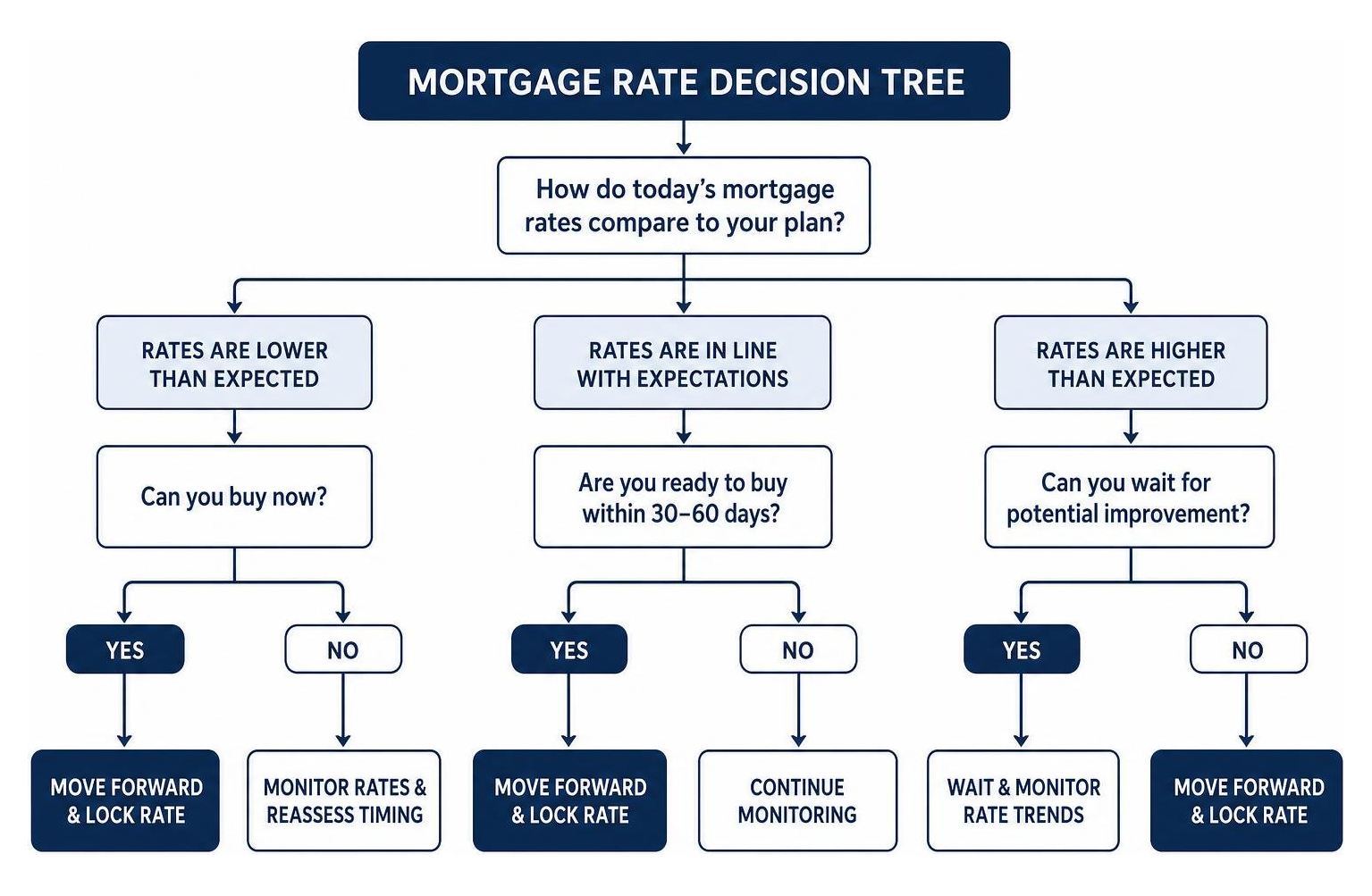
For buyers comparing options in Tampa Bay, including Tampa, St. Petersburg, Clearwater, Brandon, Wesley Chapel, and Palm Harbor, loan structure can make a meaningful difference:
- Rate Locks: Knowing When to Lock Your Mortgage Interest Rate can help you decide when locking may make sense for your situation while your loan is being reviewed.
- Credit Optimization: Securing competitive loan pricing starts with understanding What Credit Score Do You Need for a Mortgage. Different loan options, including Conventional and FHA, may use different credit, income, property, and documentation guidelines. Josh can help you explore those options; this is not official guidance from, or an endorsement by, any government agency.
Impact of Non-Mortgage Carrying Costs
In Florida, your mortgage payment is only one part of your monthly home cost. Homeowners insurance premiums, property taxes, HOA fees, and mortgage insurance should all be factored in upfront:
- Property Insurance Stabilization: Following several years of sharp rate hikes, Florida's property insurance market is showing early signs of stabilization. Citizens Property Insurance approved an average statewide rate reduction of 8.7% effective June 1, 2026, as new legislative reforms take effect and private carriers re-enter the market. However, running insurance quotes before placing an offer remains essential.
- Homeowners Association & Condo Assessments: For condo units, monthly HOA dues and upcoming special assessments for structural reserve funding can add a major cost to the monthly housing budget.
- Private Mortgage Insurance (PMI): If your loan structure includes mortgage insurance, understanding What is PMI Mortgage Insurance can help you factor that cost into your affordability calculations.
New Construction, Investor Activity, and Market Outlook
The dynamic between new homebuilders and resale sellers is one of the most compelling aspects of current Florida housing market updates. Single-family builders in parts of Tampa Bay, Central Florida, and Jacksonville have been using incentives to capture buyer interest without necessarily reducing headline prices.
To maintain nominal sticker prices, some builders across Florida may offer mortgage rate buydowns, closing cost credits, or upgraded finish packages. In suburban corridors surrounding Orlando, Tampa, and Jacksonville, those incentives could make a newly constructed home compare more favorably on monthly payment than a similar resale home at the same price, depending on the financing terms, taxes, insurance, and HOA costs.
Investor activity also remains a noticeable factor. Cash sales represented 27.4% of Q2 single-family transactions, driven by institutional rental operators and individual investors. However, local short-term rental (STR) regulations and municipal restrictions across coastal communities are causing some vacation rental investors to exit, redirecting inventory back into the long-term rental and resale buyer markets. Meanwhile, statewide median rents held flat at $2,500 per month in June 2026, offering relief to prospective buyers who are saving up a down payment while renting.
Strategic Florida Housing Market Updates for Buyers and Sellers
As we look toward the remainder of 2026 and into 2027, several macroeconomic and seasonal factors will shape the Florida housing landscape:
- Federal Reserve Monetary Policy: The Fed's policy decisions can influence the broader rate environment, but mortgage rates track the 10-year Treasury yield more directly than the Fed's benchmark rate. Rate stability could give buyers more clarity on borrowing power.
- Hurricane Season Dynamics: Florida real estate typically experiences a seasonal slowdown during late summer and early autumn. Severe weather events can temporarily pause closings and disrupt insurance underwriting windows, so buyers should factor insurance timing into their purchase plan.
- Upcoming Ballot Measures: Homeowners and real estate investors should monitor upcoming November state ballot measures that propose adjustments to Florida's homestead exemption structure and property tax limits.
- Market Timing Decisions: Buyers often ask whether holding off on a purchase makes financial sense. Evaluating Should You Wait to Buy a Home in Florida comes down to personal readiness, job stability, and localized price trajectory rather than trying to perfectly time macroeconomic interest rate cycles.
Frequently Asked Questions About Florida Real Estate
Is Florida currently a buyer's or seller's market?
Florida is currently a split, balanced market overall, but it varies significantly by property type and geographic metro. Existing single-family homes sit at a balanced 4.5 months supply of inventory for Q2 2026, favoring neither buyer nor seller completely. However, the condominium and townhouse sector has expanded to an 8.1-month supply, creating a clear buyer's market with ample negotiating room for condo purchases.
How are property insurance rates affecting Florida home purchases?
While property insurance costs remain higher than national averages, recent legislative reforms are beginning to stabilize the market. Citizens Property Insurance enacted an average 8.7% statewide rate reduction starting in June 2026. However, because insurance costs impact your debt-to-income (DTI) ratio, buyers should secure formal insurance quotes early during the home search to ensure total monthly payments stay within mortgage qualification limits.
Are new construction homes a better option than resale homes in Florida?
New construction homes are currently very attractive in Florida due to aggressive builder incentives. Many homebuilders are offering mortgage rate buydowns, closing cost assistance, and flex dollars that reduce monthly payments below what resale sellers can offer. However, resale homes often offer established neighborhoods, larger lot sizes, and immediate move-in availability without construction build delays.
What This Means for Tampa Bay Buyers
Navigating the latest Florida housing market updates requires looking beyond simplified statewide headlines. While overall single-family median prices held steady at $425,000 in Q2 2026 and closed sales grew 4.1%, smart decision-making comes down to hyper-local market analysis, property-type differences, and total monthly housing costs.
With single-family supply holding at a balanced 4.5 months and condo inventory reaching 8.1 months, buyers may have more negotiating room and inventory choice than they did in prior years. Financing structure, builder incentives, seller concessions, property insurance, taxes, and association fees can all change the real cost of a home in Tampa, St. Petersburg, Clearwater, and nearby communities.
At Home Loan Advisors LLC, based in Tampa, Florida, Josh Jampedro is a Tampa mortgage broker and vice president with more than 1,000 closed transactions and more than 10 years of experience. The goal is education first: help you understand the numbers, compare options, and decide what makes sense for your situation.
If you want to talk through your financing options, Get Mortgage Guidance from Home Loan Advisors and start a conversation with Josh.
Official platforms: Instagram @joshjampedro, YouTube @BetterRate, LinkedIn linkedin.com/in/josh-jampedro, Facebook FLHomeLoanAdvisors, and website joshjampedro.com.