All About 15-Year Home Improvement Loan Options
A Clear Starting Point for 15-Year Home Improvement Loans
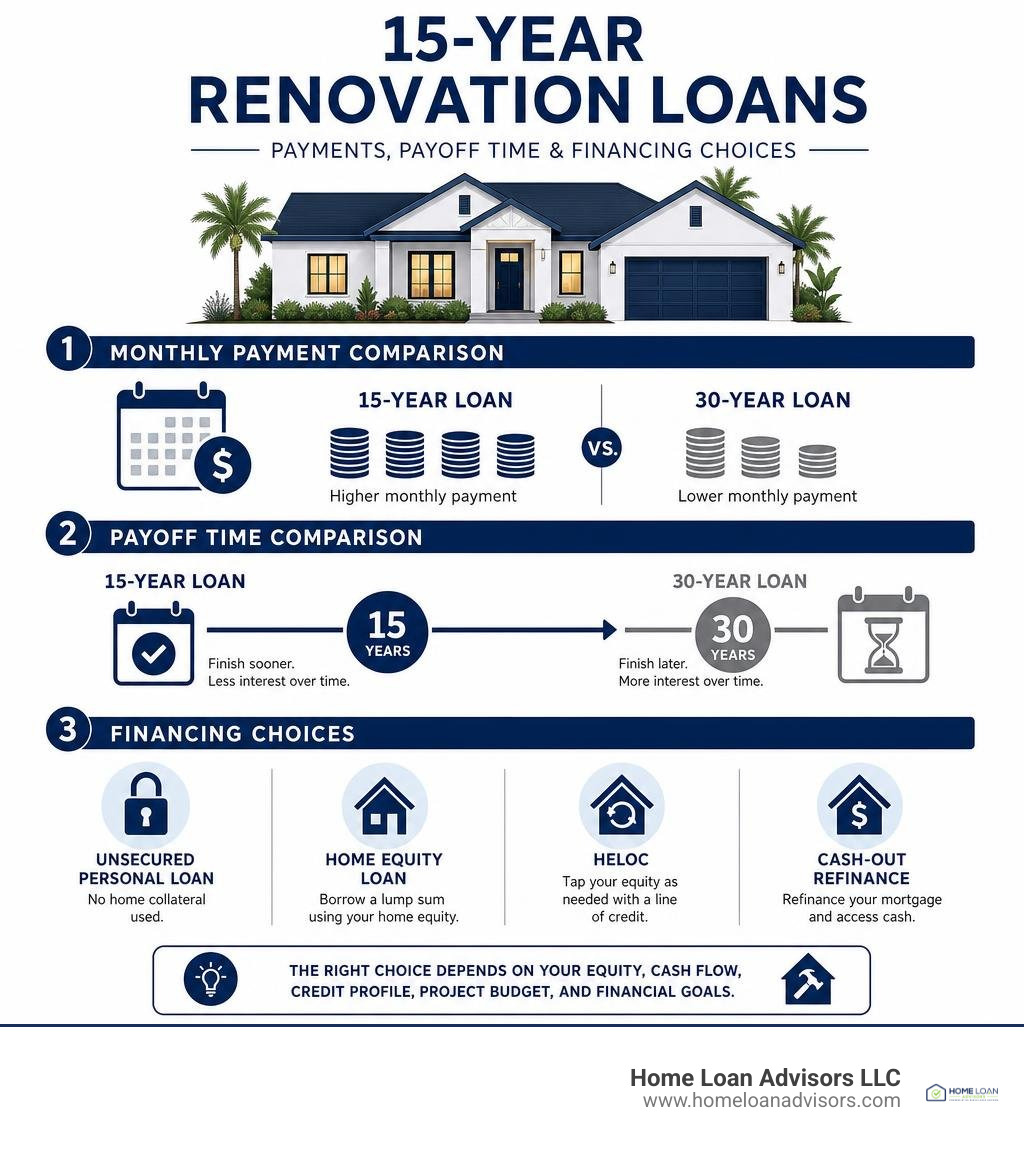
15 year home improvement loans spread the cost of a major renovation across a fixed 15-year repayment period. They may work well when you want a more manageable monthly payment than a shorter loan term, but still want to pay the balance off far sooner than a 30-year option.
Before choosing one, compare:
- Monthly payment: A longer term can reduce the required payment, but you repay for longer.
- Total borrowing cost: Shorter terms often cost less overall than longer ones, assuming similar loan amounts and rates.
- Loan type: Options may include an unsecured personal loan, a home equity loan, a HELOC, or a cash-out refinance.
- Your equity and cash flow: Some options use your home as collateral; others do not.
For Tampa, St. Petersburg, Clearwater, and nearby Florida homeowners, a 15-year term can fit larger projects such as a kitchen remodel, addition, roof replacement, hurricane-focused upgrades, or outdoor living space. The right choice depends on your existing mortgage, available equity, credit profile, project budget, and how much room you want to keep in your monthly budget.
I’m Josh Jampedro, a Tampa mortgage broker and vice president, and this guide will help you compare the trade-offs before financing a renovation.
Understanding 15 Year Home Improvement Loans and How They Work
A 15-year loan structure spreads your renovation balance across 180 equal monthly installments. Most of these products come with a fixed interest structure, meaning your principal-and-interest portion stays identical from your first payment to your last.
The underlying mechanic comes down to amortization. In standard loan schedules, your early payments are split between interest charges and principal reduction. Because a 15-year term compresses the repayment timeline compared to longer structures, a significantly larger portion of your very first payment goes toward reducing the principal balance. This structure gives you substantial borrowing power for large-scale upgrades while keeping a clear finish line in sight.
If you already have substantial equity or want to consolidate your primary mortgage and renovation costs into a single monthly bill, wrapping those costs into a 15-Year Fixed Mortgage is one path worth exploring.
Types of 15 Year Home Improvement Loans: Secured vs. Unsecured
Homeowners across Tampa Bay generally choose between secured and unsecured financing when structuring a 15-year payoff. The right option depends on how much equity you have, how fast you need funds, and your comfort level with using your property as collateral.
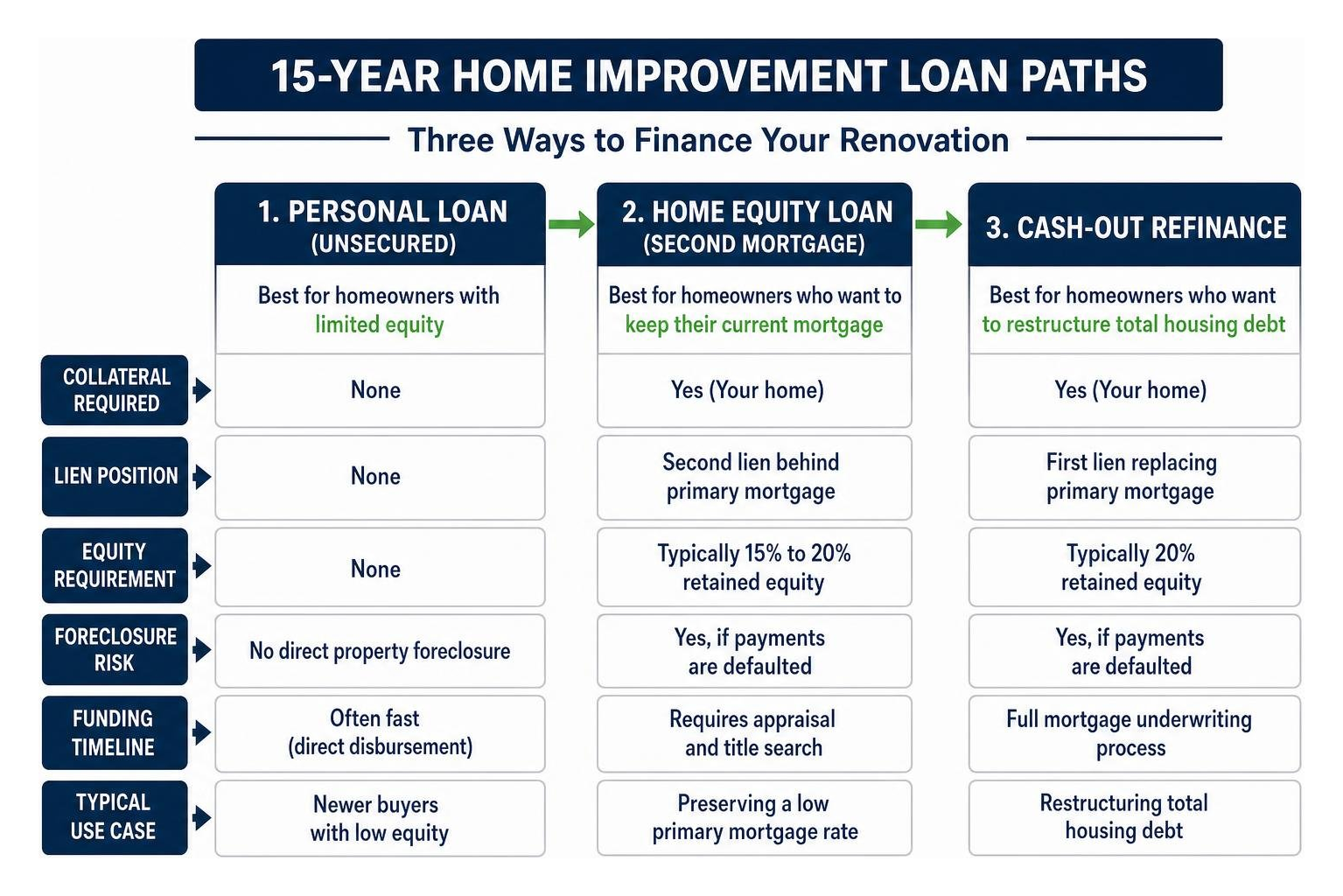
| Feature | Unsecured Personal Loan | Home Equity Loan (Second Mortgage) | Cash-Out Refinance |
|---|---|---|---|
| Collateral Required | None | Yes (Your home) | Yes (Your home) |
| Lien Position | None | Second lien behind primary mortgage | First lien replacing primary mortgage |
| Equity Requirement | None | Typically 15% to 20% retained equity | Typically 20% retained equity |
| Foreclosure Risk | No direct property foreclosure | Yes, if payments are defaulted | Yes, if payments are defaulted |
| Funding Timeline | Often fast (direct disbursement) | Requires appraisal and title search | Full mortgage underwriting process |
| Typical Use Case | Newer buyers with low equity | Preserving a low primary mortgage rate | Restructuring total housing debt |
Unsecured options let you borrow based on creditworthiness and income without putting a lien on your property. However, secured options like a second mortgage or cash-out refinancing often provide lower borrowing costs because the lender has property backing the note.
How a 15-Year Term Accelerates Equity Buildup
A shorter amortization schedule acts as a forced savings and wealth-building mechanism. With a typical 30-year schedule, the lender collects a heavy concentration of interest in the opening decade, leaving your loan balance surprisingly stubborn.
In contrast, a 15-year term allocates more money to principal from month one. If property values in neighborhoods like South Tampa, St. Petersburg, or Dunedin rise over time, that appreciation pairs with your rapid principal reduction. The result is accelerated net worth growth and substantial equity accumulation that can protect your balance sheet.
Top Renovation Projects for 15-Year Financing
Because 15 years is an extended commitment, this financing structure is best suited for substantial, long-lasting capital improvements rather than small aesthetic touch-ups.
Projects that match this borrowing horizon typically have a high project scope:
- Whole-home renovations: Updating plumbing, electrical, and interiors on historic bungalows in Tampa or classic ranch homes in Pinellas County.
- Major structural additions: Expanding square footage for growing families or adding an in-law suite.
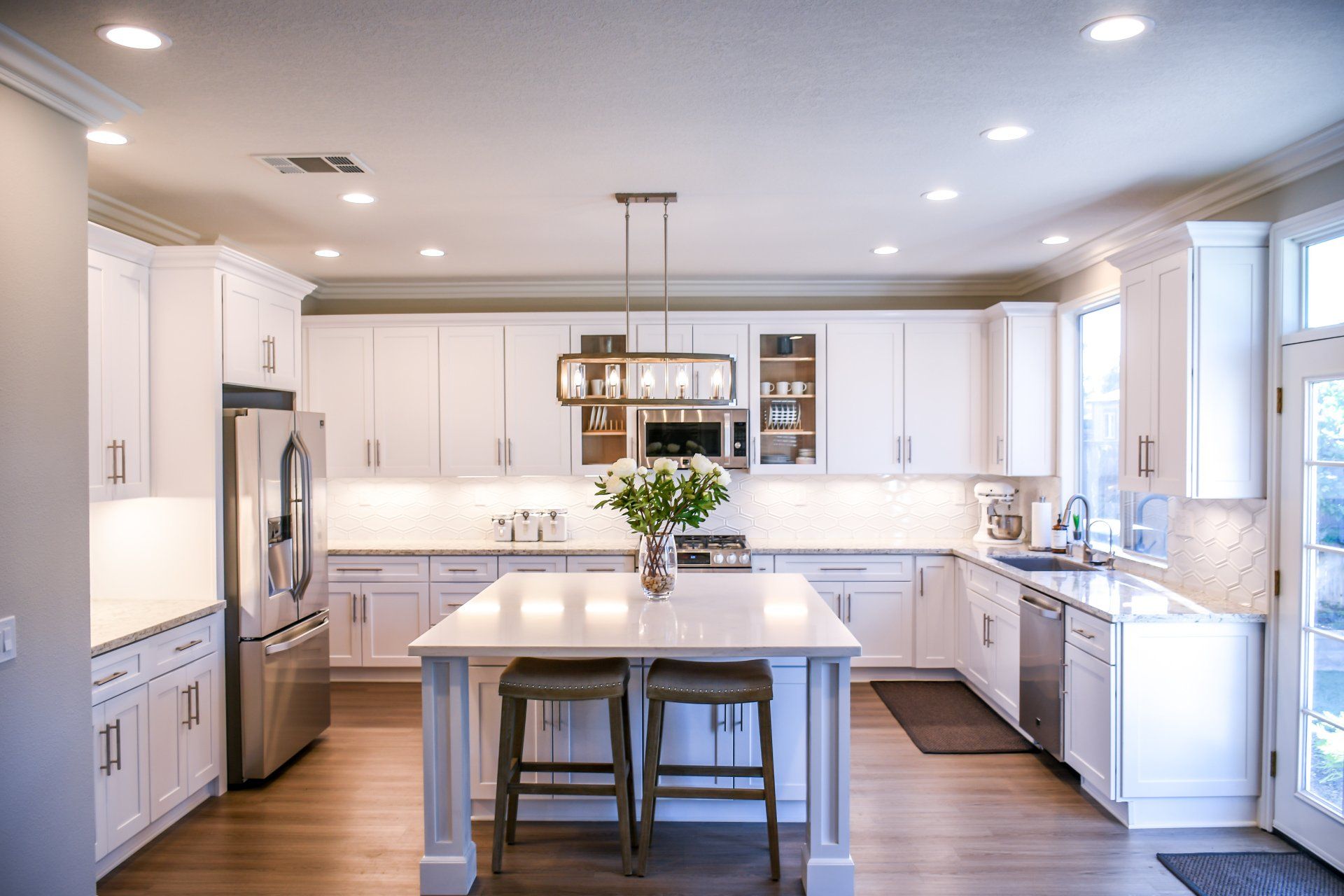
- Kitchen and primary bath overhauls: Complete structural redesigns involving custom cabinetry, quartz surfaces, and layout changes.
High-Value Upgrades for Florida and Tampa Bay Homes
In our regional market, specific improvements protect property value and enhance daily living:
- Swimming pool additions: In-ground concrete pools, integrated spas, and custom screen enclosures built for year-round Gulf Coast living.
- Hurricane-resistant roofing and impact windows: Upgrading to metal roofing, reinforced decking, and impact-rated glass to improve storm resilience and potentially lower homeowner insurance premiums.
- Outdoor living spaces and summer kitchens: Covered lanais, outdoor kitchens, and pavers designed for year-round entertaining.
- Energy efficiency retrofits: Upgraded high-SEER HVAC systems and spray-foam insulation to manage hot Florida summers.
Comparing 15-Year and 30-Year Financing Options
When setting up your renovation financing, the core decision often comes down to balancing monthly cash flow against long-term interest costs. Exploring 15 Year Vs 30 Year Mortgage Math: Which Option Is Financially Smarter? reveals how term lengths dramatically change borrowing dynamics.
Cost and Interest Trade-Offs Over Time
Lenders typically offer lower interest rate spreads on 15-year terms than on 30-year terms because the lender takes on risk for half the time. When you combine a lower rate with half the repayment time, the total lifetime interest paid drops significantly.
However, there is an opportunity cost to weigh. The higher monthly obligation of a 15-year schedule means less discretionary income each month for other investments, emergency savings, or retirement accounts. A 30-year term provides lower mandatory payments and budget flexibility, though it carries higher total borrowing costs over the full life cycle of the debt.
Calculating Payments and Cash Flow Impact
Evaluating the payment variance between terms is essential for protecting your monthly liquidity. You can use our Mortgage Calculator to run personalized scenarios based on your project budget.
For many homeowners, the right path depends on life stage:
- Pre-retirees: Often lean toward a 15-year loan to ensure all housing debt is cleared before transitioning to a fixed income.
- Early-career professionals: May prefer a longer term to keep required monthly overhead low, choosing to make voluntary extra principal payments whenever cash flow allows.
Qualifying and Applying for 15 Year Home Improvement Loans
Securing financing for your renovation requires preparing your financial documentation and understanding how lenders review your file.

Credit Score and Debt-to-Income Requirements
Lenders evaluate several core criteria during underwriting:
- Credit score tiers: Higher scores unlock the most competitive terms, whether you are applying for an unsecured loan or a mortgage-backed product.
- Debt-to-income (DTI) ratio: Lenders compare your total monthly debt payments (including the new renovation loan) against your gross monthly income. Maintaining a lower DTI shows you can comfortably carry the higher monthly payment of a 15-year term.
- Income verification: Expect to provide recent W-2s, pay stubs, or two years of personal and business tax returns if you are self-employed.
- Appraisal criteria: If you choose a secured home equity product, the lender will require an appraisal or automated valuation to confirm your home's current market value.
The Application and Prequalification Process
Navigating the application process involves a few straightforward steps:
- Prequalification and rate checks: Start with soft credit checks where available to explore potential rates and terms without impacting your credit score.
- Reviewing project bids: Gather formal written estimates from licensed Florida contractors to establish an accurate borrowing target.
- Formal application: Submit your financial records for formal underwriting and review.
- Loan funding: Once approved and clear to close, secured mortgage loans typically fund after standard rescission periods, while unsecured personal loans can disburse funds directly to your bank account.
To see what financing structure fits your property and budget, you can Get a Quote through our secure online portal.
Frequently Asked Questions About 15-Year Renovation Financing
How does a 15-year renovation loan affect my credit score?
Applying for a loan typically triggers a hard credit inquiry, which can cause a small, temporary dip in your score. Once the account is established, it adds to your credit mix. Making consistent, on-time payments over the 15-year period builds a positive payment history, which is the largest component of your overall credit score.
Can I refinance an existing mortgage into a 15-year home improvement loan?
Yes. If you have substantial equity, you can Refinance your primary mortgage into a new 15-year fixed loan while taking out additional cash for home improvements. This consolidates your primary mortgage and renovation costs into a single monthly payment, though you should factor in standard closing costs when calculating your net savings.
(Note: Conventional, FHA, and VA loan programs have specific eligibility guidelines and seasoning requirements for cash-out refinancing. Connect with a licensed advisor to review program-specific criteria.)
Is a 15-year fixed loan better than a variable HELOC?
It depends on your preference for payment stability versus borrowing flexibility. A 15-year fixed loan provides predictability because your interest rate and monthly payment do not fluctuate. A Home Equity Line of Credit (HELOC) typically features a variable rate and an initial interest-only draw period. While a HELOC allows you to draw funds incrementally as contractor invoices come due, rising interest rates could increase your future monthly payments.
Conclusion
Financing a major renovation is an investment in both your quality of life and your property's long-term value. Whether you are adding a custom pool to your Clearwater home, modernizing a kitchen in St. Petersburg, or expanding living space in Tampa, a 15-year structure offers a balanced middle ground between monthly affordability and rapid debt payoff.
At Home Loan Advisors, we provide education-focused guidance to help Florida homeowners select the right financing path for their unique goals. If you want to review your equity, compare terms, or evaluate a 15-Year Fixed Mortgage option, I am here to help you evaluate your options without high-pressure sales tactics.
Ready to explore your renovation options? Contact Josh Jampedro (NMLS #1082889) at Home Loan Advisors to discuss what financing structure makes the most sense for your upcoming project.
Mortgages are complex so let me give you the tools you need to make the right decisions.
Equal Housing Lender. Josh Jampedro, NMLS #1082889. Home Loan Advisors LLC provides mortgage brokerage services in Florida and Wisconsin. All loan programs, including Conventional, FHA, VA, and USDA options, are subject to borrower qualification, credit approval, and property appraisal guidelines. Content is for educational purposes only and does not constitute a commitment to lend.